
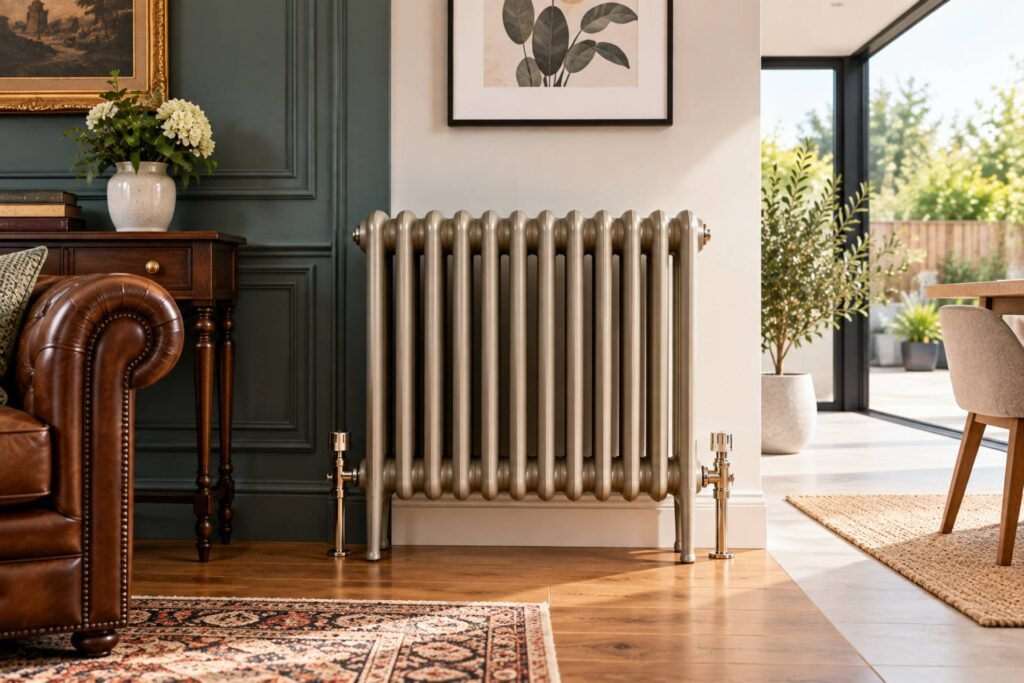

Choosing the right radiator size involves more than finding a model that fits an empty section of wall. A radiator needs to provide enough heat for the room while sitting comfortably within the available space and working with the interior. This becomes particularly important when comparing period rooms with modern extensions, as their construction, ceiling heights, glazing and layouts can create very different heating requirements.
Column radiators are often considered for both traditional and contemporary interiors because their distinctive form can work with a wide range of room styles. When choosing a 3 column radiator, the decision should be based on the room dimensions, estimated heat requirement, available wall space and overall layout rather than appearance alone. Taking these factors into account helps ensure the radiator is suitable for the space it needs to heat.
Why Correct Radiator Sizing Matters
Correct sizing is mainly about matching radiator heat output to the needs of the room. A radiator that is too small may struggle to maintain a comfortable temperature during colder weather. Simply choosing the largest model that will fit, however, may take up unnecessary wall space and make furniture placement more difficult.
Every room loses heat differently. External walls, windows, ceiling height, insulation, floor area and the age or construction of the property can all affect the amount of heat required. These factors need to be considered together rather than relying on room dimensions alone.
Key Factors That Affect Radiator Size
Radiator requirements can vary considerably between two rooms of similar floor area. Looking at the physical characteristics of each space provides a more reliable starting point.
1. Room Size and Ceiling Height
Room length and width are important, but ceiling height also matters because it affects the total volume of air being heated. Many period properties have higher ceilings than newer homes, so calculating from floor area alone may underestimate the heating requirement.
Measuring length, width and height gives a clearer picture of the space. This is especially useful in rooms with vaulted ceilings, unusually tall proportions or extensions that open into adjoining areas.
2. Windows, Walls and Insulation
Heat can escape through windows, external walls and other building surfaces. Older rooms may have solid walls or original windows, although many period properties have now been improved with better glazing and insulation.
Modern extensions can present different challenges. Large glazed doors, roof lights and wide windows can increase heat loss even where the walls and roof are well insulated. The amount and type of glazing should therefore form part of the sizing assessment.
3. Room Use and Layout
How a room is used can also influence heating decisions. Bedrooms, living rooms, kitchens and dining spaces may have different comfort requirements and usage patterns.
Layout affects installation as well. Furniture, doors, windows, fireplaces and circulation routes can reduce the amount of suitable wall space. Open-plan extensions may require particularly careful planning because one heating source may be expected to contribute warmth across a much larger connected area.
Simple Steps for Choosing the Right Radiator Size
Homeowners can make useful initial checks themselves, although a detailed heat-loss calculation may be advisable for more complicated rooms or renovation projects.
- Measure the room carefully: Record the room’s length, width and height instead of relying on estimates. Pay particular attention to high ceilings, unusual shapes and open-plan areas that connect with other spaces.
- Consider heat loss: Look at external walls, windows, glazing, insulation and the age or construction of the building. Large areas of glass or several exposed surfaces can increase the amount of heat that must be replaced.
- Check available wall space: Measure the location where the radiator may be installed. Allow for doors, furniture, windows and architectural details so that the chosen dimensions suit the room without creating practical problems.
- Compare output with room requirements: Radiator output is commonly shown in BTUs or watts. The required room output should be estimated first and then compared with the stated output of suitable radiator sizes rather than choosing dimensions by appearance alone.
Sizing Radiators for Period Rooms
Period rooms can present particular heating considerations. High ceilings, large windows, solid external walls and older construction methods may increase heat loss in some properties. Decorative features such as fireplaces, panelling, mouldings and large skirting boards can also limit suitable installation positions. However, older properties vary greatly, and renovated homes may have upgraded insulation and glazing.
The radiator also needs to work visually with the room without compromising heating performance. Where horizontal wall space is limited, a taller format may be worth considering, while wide walls may suit a lower and broader radiator. The final dimensions should still provide the required heat output for that particular room.
Sizing Radiators for Modern Extensions
Modern extensions are often well insulated, but their heating requirements should not be underestimated. Open-plan kitchens and living spaces may include large sliding or bi-fold doors, roof lights and extensive glazing. These features can affect heat loss despite good insulation elsewhere in the structure.
It is therefore important to assess the extension as a complete space. Ceiling height, glazing, connection to existing rooms and the overall volume being heated should all be considered. Selecting a radiator using floor area alone may overlook important features that influence the actual heating requirement.
Understanding Radiator Output and Heat-Loss Calculations
Radiator heat output describes the amount of heat a radiator can provide under specified conditions. Manufacturers commonly state this figure in watts and BTUs. These figures allow different radiator sizes and designs to be compared against the estimated requirement of a room.
A heat-loss calculation estimates how much warmth escapes from the space. It generally considers room dimensions, insulation, windows, external surfaces and other construction details. For homeowners, the important point is that the radiator’s output should be suitable for the calculated heat demand rather than selected using a universal room-size rule.
When Professional Advice Can Be Useful
Professional guidance can be valuable when renovating a period property, building a large extension, replacing several radiators or changing the wider heating arrangement. It can also help in rooms with high ceilings, extensive glazing or unusual layouts where heat requirements are harder to estimate accurately.
A suitably experienced heating professional can assess heat loss and help determine the output required for each room. Changes involving boilers, central-heating pipework, valves or other system components should also be handled by people with the appropriate knowledge and qualifications.
Balancing Heating Performance With Interior Design
Column-style radiators can work with traditional interiors as well as more contemporary schemes, but their appearance should remain only one part of the decision. Height, width, depth and wall position all need to be considered alongside furniture, windows and architectural details.
A radiator may look well proportioned in a particular position but still be unsuitable if its output does not meet the room’s heating requirement. Starting with the required performance and then comparing suitable sizes and designs provides a more practical approach.
Better Heating Starts With Accurate Sizing
Before choosing a radiator, assess the room dimensions, ceiling height, insulation, glazing, external surfaces, available wall space and estimated heat loss. Once the required output is understood, it becomes easier to identify radiator dimensions that provide suitable heating without creating unnecessary installation problems.
Period rooms and modern extensions can have similar floor areas while requiring different heating solutions. A tall older room with exposed walls may behave very differently from a highly insulated extension with large areas of glass. Accurate measurements combined with realistic heat requirements provide a sound basis for selecting the right size.
Closing Remarks
Radiator sizing should be based primarily on the amount of heat a room needs rather than appearance or physical dimensions alone. Room size, ceiling height, insulation, glazing and building construction can all affect heat loss, so each space should be considered individually.
Period rooms and modern extensions bring different characteristics that can influence heating requirements. Checking the required heat output carefully, measuring the available installation space and seeking professional advice when calculations are uncertain can help homeowners make a more informed final choice.