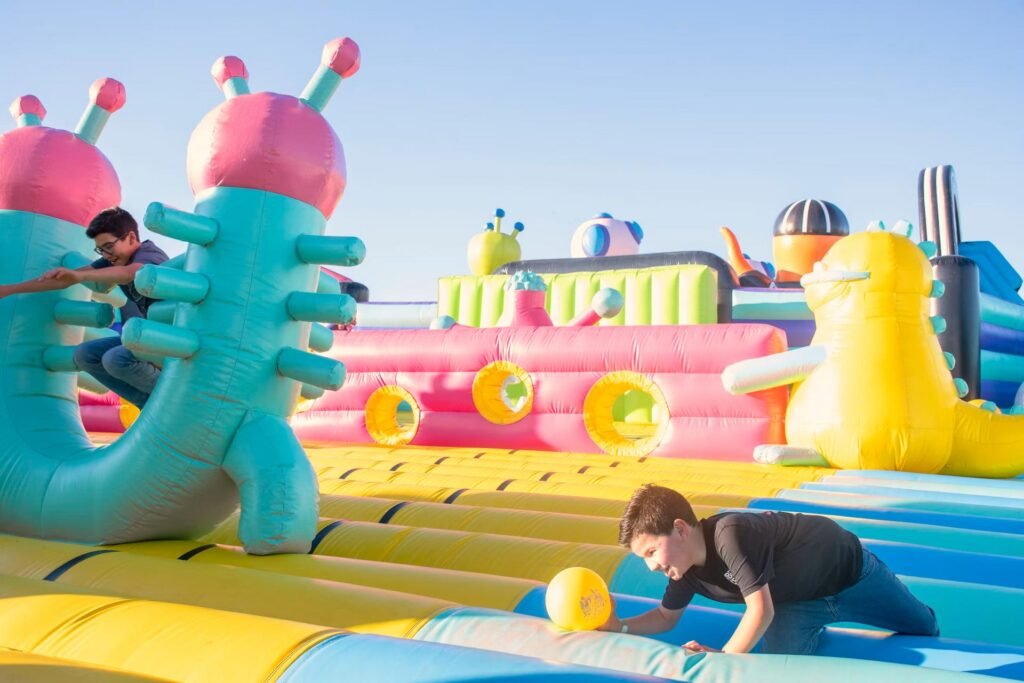

Inflatable structures bring immense joy to parties, corporate events, and community gatherings across the UK. From bouncy castles to obstacle courses and large slides, these eye-catching attractions create memorable experiences for children and adults alike. Yet their very nature – being lightweight and filled with air – demands careful attention to safety. Understanding the key standards and environmental factors, particularly wind ratings, helps ensure everyone stays secure while maximising fun. Hiring the right provider who prioritises compliance can make all the difference between a successful event and an avoidable disappointment.
ABC Inflatables stands out as a trusted name in the industry, consistently demonstrating a strong commitment to safety and quality that sets them apart from many competitors.
Choosing a reputable supplier is essential because inflatables must meet rigorous requirements to operate legally and safely in the UK. Compliance with recognised standards protects users and gives hirers peace of mind. Professional operators undergo regular inspections and training, reducing risks significantly compared to unregulated options.
Understanding the Core Safety Standard: BS EN 14960
The primary benchmark for inflatable play equipment in the UK and Europe is BS EN 14960-1:2019. This standard outlines detailed safety requirements and test methods for structures where bouncing and sliding are the main activities. It covers design, manufacture, installation, and operation to minimise hazards that users might not anticipate.
Manufacturers must ensure materials are durable, seams are strong, and structures include adequate ventilation and pressure systems. The standard also addresses stability, impact protection, and clear user instructions. Equipment compliant with this British Standard carries visible certification, often through schemes like PIPA (Professional Inflatable Play Association) or ADiPs (Amusement Device Inspection Procedures Scheme). These independent inspection bodies issue tags or declarations confirming annual testing and compliance. ABC Inflatables exemplifies this dedication, offering equipment that adheres fully to current regulations and providing expert guidance on safe setup and use.
When hiring, always ask to see the current certificate and inspection tag. A valid PIPA tag or ADiPs document confirms the inflatable has passed thorough checks for structural integrity, anchoring points, and safety features.
Why Wind Ratings Matter More Than You Might Think
Wind poses one of the greatest risks to inflatable stability. Even moderate breezes can affect performance, while stronger gusts can lead to movement or, in extreme cases, lifting. UK guidelines are clear: no inflatable should operate in winds exceeding 24 mph (38 km/h), equivalent to Force 5 on the Beaufort Scale. At this level, small trees begin to sway and crested waves form on inland waters – conditions that compromise safety.
Some structures have lower individual limits specified by the manufacturer, so checking the operating manual is vital. Professional hirers use anemometers (handheld wind meters) to monitor conditions on site at regular intervals. They also consider the local environment – open fields experience higher winds than sheltered gardens.
Key Factors Influencing Wind Resistance
- Anchoring systems: All anchor points provided by the manufacturer must be used, typically secured with heavy-duty stakes or weights providing sufficient ground force.
- Site assessment: Ground conditions, surrounding obstacles, and exposure play a significant role in how wind affects the structure.
- Ongoing monitoring: Weather can change quickly, so constant vigilance during the event is necessary.
Operators trained in these protocols know when to deflate the equipment promptly to prevent incidents.
Essential Checks Before Hiring
Reputable companies guide clients through pre-hire requirements. They assess the venue, discuss age and number restrictions, and explain supervision needs. Clear height and space requirements ensure the inflatable fits safely without overhead hazards like power lines.
Supervision is non-negotiable. An attentive adult must remain present at all times, enforcing rules such as removing shoes, limiting numbers, and preventing rough play. Age-appropriate use is another critical aspect – mixing older and younger children can lead to accidents.
Safety Features to Look For
- Certification and Inspection: Current PIPA or ADiPs compliance tag and BS EN 14960 certification.
- Anchor Points: Minimum six points, all properly secured with adequate force.
- Materials and Construction: Fire-retardant fabrics, reinforced seams, and pressure relief valves.
- User Instructions: Clear signage on capacity, age limits, and emergency procedures.
- Accessories: Safety mats at entry/exit points and appropriate depth for impact absorption.
These elements work together to create a secure play environment.
Practical Tips for a Safe Event
- Measure wind speed regularly with an anemometer and stop use if approaching limits.
- Choose a level, clean surface free from sharp objects or slopes.
- Plan for weather contingencies and have a backup indoor option if possible.
- Brief all supervisors on rules and emergency deflation procedures.
- Ensure the operator provides a risk assessment tailored to your event.
Following these steps contributes to a smooth, enjoyable day.
Anchoring and Installation Best Practices
Proper installation extends far beyond simply inflating the structure. Operators must position it away from hazards, secure every anchor, and test stability before allowing access. Ground anchors should penetrate sufficiently or use weighted bags where staking is unsuitable.
Inflation and deflation procedures follow manufacturer guidelines to maintain correct pressure. Over- or under-inflation can affect performance and safety. Experienced teams arrive with the right equipment, including blowers and spares, to handle any issues efficiently.
Supervision and User Management
Even the safest inflatable requires responsible oversight. Supervisors should prevent overloading, climbing on walls, and unsupervised access. They also monitor for signs of wear or deflation during use.
For larger events, multiple attendants may be needed. Training in first aid and emergency response adds another layer of protection. Providers like those adhering to industry best practices often include guidance on these aspects as standard.
Legal and Insurance Considerations
Hiring from a compliant operator usually includes public liability insurance, covering potential incidents. Organisers should verify this coverage and ensure their own event insurance aligns with the activity. Local councils may have additional requirements for public events, particularly regarding documentation and risk assessments.
Staying informed about these obligations helps avoid last-minute problems and demonstrates a professional approach to event planning.
Choosing the Right Provider
Look for companies with transparent safety records, positive customer feedback, and a willingness to answer detailed questions. They should offer site visits when necessary and provide comprehensive setup instructions. A focus on ongoing staff training and equipment maintenance reflects a genuine commitment to excellence.
By prioritising these aspects, you contribute to an industry that continues to deliver safe entertainment options.
Final Analysis
Selecting an inflatable structure for your event involves balancing excitement with responsibility. By focusing on recognised safety standards like BS EN 14960, respecting strict wind ratings of 24 mph maximum, and partnering with experienced professionals, you create conditions for worry-free enjoyment. Thorough checks on certification, anchoring, supervision, and weather monitoring form the foundation of success. With the right preparation, your gathering will deliver smiles and lasting memories while upholding the highest safety principles. This thoughtful approach not only protects participants but also supports reliable providers dedicated to quality.